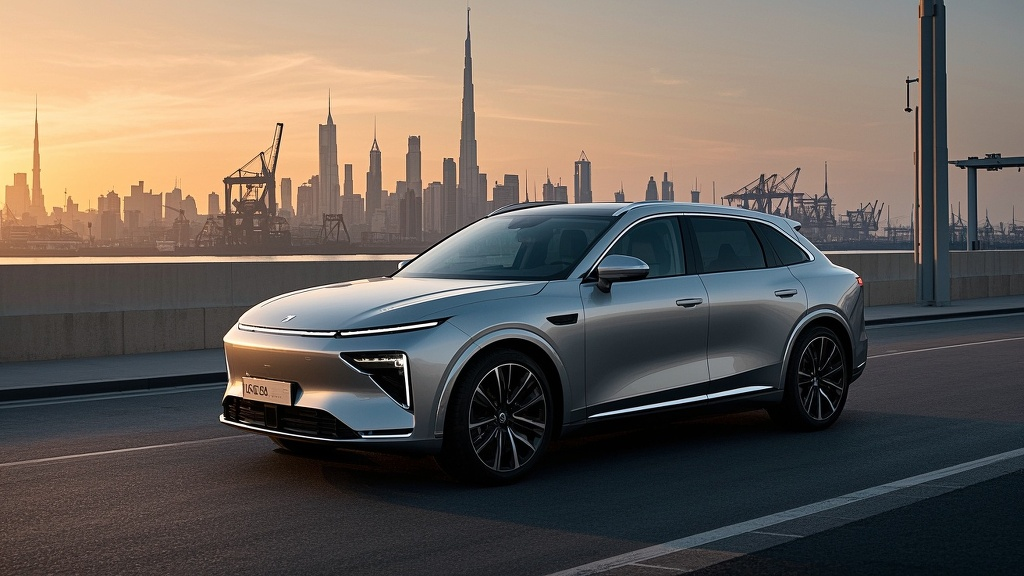
BYD Qin PLUS DM-i 2024 Kenya Export Outlook: CIF from Guangzhou to Mombasa Port
中文译名:比亚迪 秦PLUS DM-i 2024
Lead: Demand and Trend in Kenya for BYD Qin PLUS DM-i 2024

Kenya’s passenger car market is shifting from legacy, high-mileage Japanese imports toward efficient, low-operating-cost hybrids and plug-in hybrids. Buyers are looking for sedans that balance price discipline with real-world fuel savings and dependable uptime. The BYD Qin PLUS DM-i 2024, positioned at USD $17,000–$22,000 CIF to Mombasa Port on wholesale/CIF terms from Guangzhou, matches this trajectory: high-efficiency powertrain, competitive sedan practicality, and maturing Chinese supply chain reliability. Dealers ask whether a PHEV makes sense in a grid with uneven charging access; the answer depends on use profile. In urban Nairobi commuting, even partial charging yields tangible cost reductions; for intercity trips, the efficient 1.5L engine anchors predictable range. Kenyan distributors increasingly view Chinese PHEVs not as speculative bets but as margin-protective inventory against fuel price volatility.
I. Market Overview
Kenya’s automotive demand concentrates around Nairobi, Mombasa, and Kisumu, with fleet operators and SMEs prioritizing total cost of ownership (TCO) and parts continuity. Historically, used Japanese imports dominate due to established service knowledge and price familiarity. However, three structural shifts are visible:
- Fuel cost pressure: Petrol prices and tax components have trended upward, intensifying the market’s appetite for low consumption sedans.
- Policy signaling: Authorities have communicated support for lower-emission mobility over time; importers anticipate more predictable treatment for hybrids/PHEVs versus conventional ICE.
- Chinese import normalization: Kenyan buyers are more comfortable with Chinese brands thanks to stable supply, better documentation, and growing parts channels. Ro-Ro carriers and forwarding agents now routinely handle Chinese sedans alongside SUVs and pickups.
Result: A window for PHEVs that do not rely on dense public charging networks but can leverage home/office charging when available, backed by an efficient ICE engine to cover longer journeys.
II. Model Highlights: BYD Qin PLUS DM-i Fit for Kenya
The Qin PLUS DM-i 2024 aligns with Kenya’s urban-heavy usage, where predictable operating costs and basic sedan practicality matter more than premium features. The DM-i system combines a 1.5L Atkinson-cycle engine with an electric drive and BYD’s Blade battery. For Kenya, the key is the hybrid strategy: a vehicle that delivers fuel savings regardless of grid reliability, but can amplify savings with periodic charging.
| Feature | Kenya Market Relevance | Data Point / Note |
|---|---|---|
| Fuel Efficiency (DM-i PHEV) | Cuts fuel exposure for commuting; mitigates volatility in pump prices | Approx. 3.8–4.5 L/100km real-world hybrid use; EV-only daily trips possible when charged |
| Electric Range Flexibility | Useful for short urban legs; optional charging boosts savings | Variants commonly ~55–120 km EV range (depending on battery spec) |
| Cabin/Boot Practicality | Family and fleet use; taxi/ride-hailing compatible | 5 seats; trunk ~450–470 L; wheelbase ~2,700 mm |
| TCO & Price Discipline | Entry price supports faster payback vs higher-consumption sedans | $17,000–$22,000 CIF (Mombasa); low routine maintenance |
Two caveats for Kenya’s operating environment:
- Road conditions vary: Sedans are optimal for paved urban routes; for rural roads, dealers should align expectations on ground clearance and recommend protective packages (splash guards, underbody protection).
- Right-Hand Drive (RHD) compliance: Kenya requires RHD for standard registration. Confirm RHD configuration at ordering; LHD exemptions are narrow and not suitable for typical retail/fleet use.
III. Price Analysis: CIF, Duties, and Landed Cost Reference
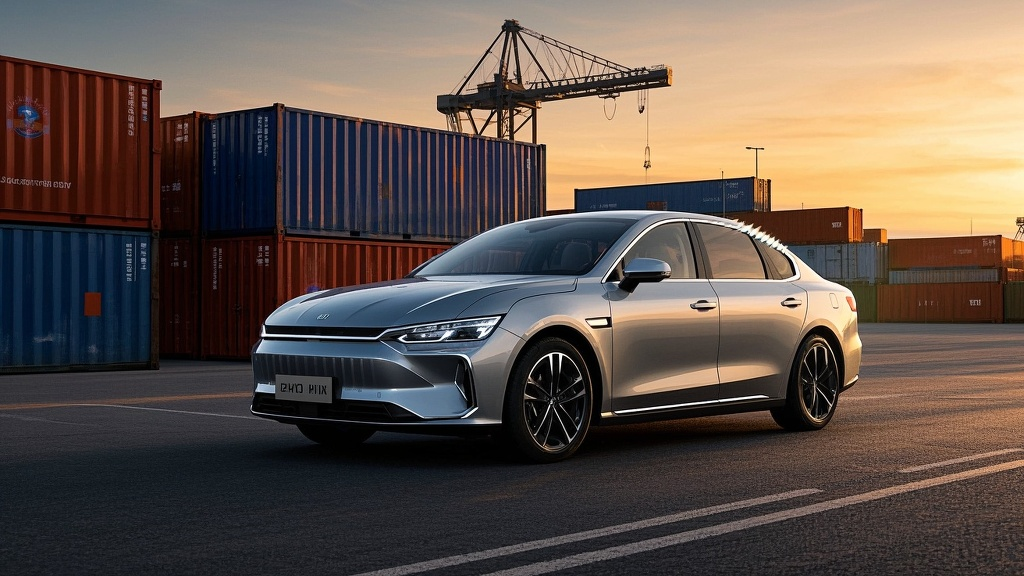
Transaction type: CIF export, wholesale. Quoted CIF to Mombasa Port: $17,000–$22,000 per unit depending on configuration, battery option, and shipping method (Ro-Ro vs. container). CIF includes ocean freight and marine insurance up to Mombasa.
Beyond CIF, Kenyan importers consider statutory charges and taxes. Actual payable amounts depend on NTSA/Customs classification, vehicle age (new/near-new stock is favored), engine specs, and potential hybrid/PHEV treatment. Typical components to budget for (indicative only; verify with your customs broker):
- Import Duty: Commonly around 25% of CIF value (subject to HS code classification).
- Excise Duty: Rate varies by vehicle type/engine capacity and policy updates; hybrids/PHEVs may attract lower rates in some schedules. For planning, model two scenarios:
- Scenario A (preferential hybrid/PHEV): ~10% of the excise base.
- Scenario B (standard passenger sedan): ~20–25% of the excise base.
- VAT: Generally 16%, applied to the taxable value after duty and excise.
- Railway Development Levy (RDL): Often ~2% of CIF.
- Import Declaration Fee (IDF): Often ~3.5% of CIF (or fixed minimum).
Illustrative landing (not a quotation, for planning only):
- Assume CIF = $19,500
- Import Duty (25%): ~$4,875
- RDL (2%): ~$390
- IDF (3.5%): ~$683
- Excise Duty:
- A) Hybrid preferential 10%: ~$1,950 (illustrative)
- B) Standard 20–25%: ~$3,900–4,875 (illustrative)
- VAT (16% applied after duty/excise and other taxable items): varies by scenario; expect a material addition
Indicative landed ranges (vehicle + taxes/levies, excluding registration/plate/inspection fees) may settle around mid-to-high $20,000s under Scenario A, and push into low $30,000s under Scenario B. Dealers should obtain a formal tariff ruling and up-to-date rate confirmation prior to order placement.
Key note: Kenya enforces age restrictions and RHD requirements. As a 2024 model, age compliance is typically straightforward. Ensure your broker aligns HS code and hybrid/PHEV classification correctly to avoid re-assessment.
IV. Logistics & Supply Chain: Guangzhou to Mombasa Port
Shipping lanes from South China to East Africa are well-established. From Guangzhou export yards, there are two dominant transport modes:
- Ro-Ro (Roll-on/Roll-off): Cost-effective for complete vehicles; simpler handling; frequent sailings to Mombasa. Suited for single-unit or multi-unit wholesale dispatch.
- Containerized (40’HQ): Provides added protection and room for spares or accessories; slightly higher handling cost and time. Suitable when combining vehicles with parts shipments.
Standard process overview:
- Pre-shipment checks: RHD configuration confirmation, compliance documents, vehicle inspection records.
- Export documentation: Commercial invoice, packing list, bill of lading, insurance certificate, origin declaration. For some cases, pre-export inspection may be required; coordinate with your Kenyan agent.
- Port operations: Loading at South China ports; feeder or direct vessel depending on schedule.
- Transit time: Approximately 25–35 days at sea, subject to carrier routing and seasonality.
- Arrival at Mombasa: Customs clearance liaising with broker; payment of duties/levies; release to local yard or onward trucking.
Supply stability: BYD and Tier-1 Chinese component suppliers have scaled capacity, and wholesale lots can be scheduled on a rolling basis. Inventory planning should account for 2–4 weeks lead time before vessel cut-off for inspection, finance, and documentation.
V. Cooperation Models & Recommendations
Wholesale/CIF export from Guangzhou suits Kenya distributors targeting sedimented demand in Nairobi/Mombasa and corporate fleets. Suggested frameworks:
- Wholesale MOQ: Ro-Ro shipments allow flexible lot sizes (from single units). For better freight economics, bundle 6–12 units per sailing.
- Configuration alignment: Lock RHD specification, color mix, battery option (e.g., ~55 km vs ~120 km EV range) based on buyer profiles (ride-hailing vs corporate commute).
- Pre-delivery add-ons: Floor mats, underbody protection, basic telematics, and spare filters. Consider including a 12–24 month parts kit per fleet tranche.
- Commercial terms: Typical 20–30% deposit on PI, balance against copy of B/L. Currency USD; Incoterm CIF Mombasa. Payment instruments: T/T, LC (subject to bank acceptance).
- After-sales enablement: Train local technicians on DM-i system basics; stock key fast-moving parts (filters, brake pads, 12V batteries, sensors). Coordinate with a local service hub in Nairobi.
- Compliance advisory: Verify Kenyan RHD regulations and hybrid/PHEV excise treatment with NTSA/Customs prior to shipment. Avoid LHD unless under specific exemptions not suitable for mainstream sales.
We invite Kenyan dealers to visit our Guangzhou export base for model inspection, test drives, and documentation workshops. Face-to-face alignment reduces lead-time variability and improves tariff classification outcomes.
VI. Conclusion
The BYD Qin PLUS DM-i 2024 integrates a pragmatic PHEV architecture with sedan practicality at a CIF range that supports Kenyan TCO goals. Chinese automotive supply chains have reached maturity: predictable production slots, professional forwarding, and documentation accuracy. For Kenyan distributors, the model’s value proposition is straightforward—fuel savings without range anxiety, with wholesale pricing that preserves margins. Platform credibility matters: consistent post-sale parts flow and reliable dispatch rhythms. Our Guangzhou hub is structured for repeatable CIF exports to Mombasa with transparent documentation and coordination with Kenyan brokers.
Contact us or visit our Guangzhou export base.
VII. Frequently Asked Questions
- Q1: Is the BYD Qin PLUS DM-i available in Right-Hand Drive (RHD) for Kenya?A: RHD compliance is essential in Kenya. Confirm RHD availability at PO stage; we only ship units that meet Kenya’s RHD requirements for normal registration.
- Q2: What charging setup is recommended given Kenya’s grid conditions?A: A standard home/office AC charging solution (single-phase) is sufficient for daily top-ups. For fleets, schedule overnight charging rotation. The DM-i system maintains low fuel consumption even when charging is sporadic.
- Q3: How does warranty and parts support work for wholesale buyers?A: We provide export-grade warranty terms and parts provisioning for fast-moving components. Dealers are advised to stock a baseline parts kit per 10 units and integrate technician training for the DM-i system.
- Q4: What documents should Kenyan importers prepare to smooth customs clearance?A: Commercial invoice, packing list, bill of lading, insurance certificate, and origin declaration. Coordinate with your broker on HS code classification and any hybrid/PHEV excise specifics; keep pre-shipment inspection records if applicable.
- Q5: What shipping mode is preferable—Ro-Ro or container?A: Ro-Ro is cost-effective for vehicles and offers frequent sailings to Mombasa. Container is suitable if bundling vehicles with parts or seeking additional physical protection. Lead times are broadly similar (25–35 days), subject to carrier schedules.
For more information, you can contact us. jiasou666@gmail.com
相关文章