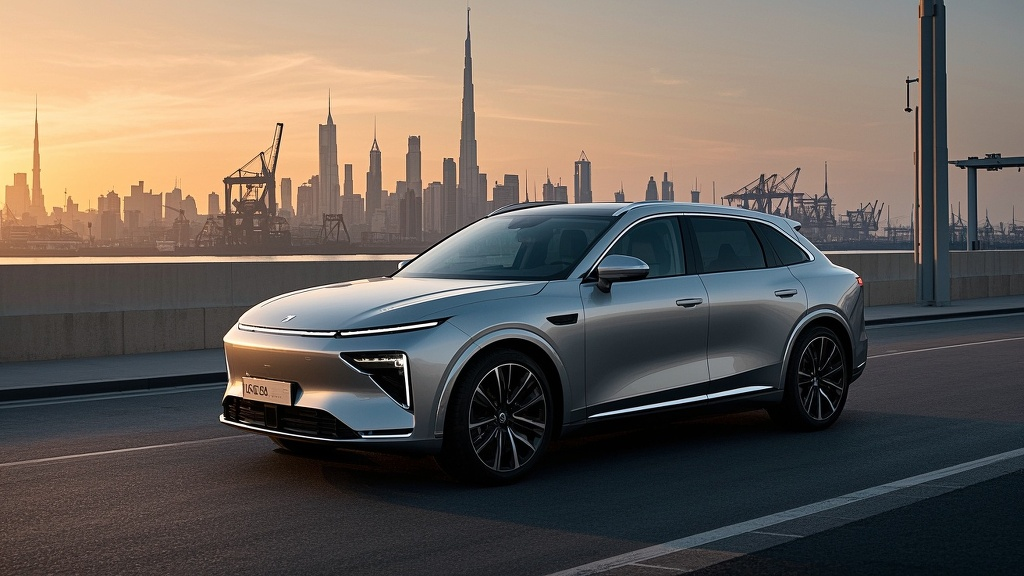
Which Spacious and Fuel-Efficient Family Cars Are Worth Choosing? 2025 Tested Recommendations for Instant Decision-Making
jiasou 563 2025-11-10 17:26:51 编辑
🚗 For Chinese families, "sufficient space" and "fuel efficiency" are the two core demands when choosing a family car. Multi-child families need ample rear seating and storage space, commuters care about long-term vehicle costs, and weekend campers require both loading capacity and range. Based on 2025's latest vehicle test data, this article selects truly "spacious + fuel-efficient" family cars from three categories—SUVs, MPVs, and sedans—to help you make informed choices without regrets.
I. Core Criteria: How to Judge "Spaciousness + Fuel Efficiency" in Family Cars
1. Spaciousness Evaluation: 3 Key Indicators
- Wheelbase ≥ 2700mm is considered spacious, ensuring comfortable seating for front and rear passengers.
- Rear legroom ≥ 700mm, allowing passengers 175cm tall to sit without feeling cramped during long rides.
- Regular trunk capacity ≥ 500L or expandable storage space to meet daily and travel needs.
2. Fuel Efficiency Evaluation: Standards for 2 Vehicle Types
- PHEV/HEV (Plug-in Hybrid/Electric Vehicle): Depleted battery fuel consumption ≤ 5.5L/100km (depleted battery fuel consumption refers to the actual fuel consumption when the vehicle runs solely on gasoline with a dead battery, directly reflecting fuel economy).
- Fuel-powered vehicles: Combined fuel consumption ≤ 7L/100km, keeping daily commuting costs manageable.
II. Category-by-Category Recommendations: Comparisons of Spacious and Fuel-Efficient Family Cars
1. Hybrid SUVs (Top Choice for Families, Flexible Space)
🔋 Hybrid SUVs balance passability and space flexibility, making them the first choice for most families. All models below are verified by professional tests from Dongchedi (懂车帝) and Autohome (汽车之家):
| Model Name | Price Range | Wheelbase (mm) | Rear Legroom (mm) | Trunk Capacity (L) | Depleted Battery Fuel Consumption (L/100km) | Combined Range (km) | Core Advantages |
|---|---|---|---|---|---|---|---|
| BYD Song PLUS DM-i | 135,800 - 180,800 RMB | 2765 | 780 | 574 (1600 expanded) | 3.8 | 1245 | Cost-effective king, fast-charging support, policy-friendly |
| Geely Galaxy L9 | 179,800 - 219,800 RMB | 2950 | 850 | 605 (230 in 7-seat mode) | 5.23 | 1300 | Large 6-seat layout, 800V ultra-fast charging |
| Dongfeng Aeolus L7 PHEV | 99,900 - 139,900 RMB | 2785 | 760 | 610 (1768 expanded) | 4.81 | 1500 | Benchmark in 100k RMB class, 149.3% range achievement rate |
| Li Auto L6 | 219,800 - 279,800 RMB | 2920 | 820 | 580 (1300 expanded) | 5.3 | 1315 | Extended-range hybrid, rich intelligent features |
| Honda CR-V 锐・Hybrid | 209,800 - 276,800 RMB | 2700 | 750 | 561 | 4.9 | 1000 | Mature hybrid technology, high resale value |
Model Highlights
- BYD Song PLUS DM-i: Starting at 135,800 RMB, it offers an affordable entry point. The rear seat can accommodate two child safety seats plus storage boxes, easily fitting camping gear for weekend trips. With a depleted battery fuel consumption of 3.8L, urban commuting costs as low as 0.05 RMB/km in pure electric mode.
- Geely Galaxy L9: Boasting a 2950mm wheelbase and native 6-seat layout, its third-row legroom reaches 850mm—allowing passengers 175cm tall to cross their legs comfortably, ideal for multi-child families. It supports 30%-80% fast charging in 18 minutes, eliminating range anxiety on long journeys.
- Dongfeng Aeolus L7 PHEV: Starting at 99,900 RMB, it delivers unbeatable cost performance. The expanded trunk volume of 1768L can hold camping tents and folding tables. Tested to achieve 2239km on a single tank and charge during a Hainan island tour, it requires no frequent refueling for long drives.
- Li Auto L6: Extended-range hybrid technology eliminates range anxiety, and the flat rear floor enhances comfort. Its advanced driver assistance system suits long commutes, and the 219,800 RMB price tag is more affordable than the L9, balancing space and technology.
- Honda CR-V 锐・Hybrid: Enjoy low fuel consumption without charging—only around 5L/100km when using air conditioning in urban areas. It consistently ranks among the top hybrid SUVs in resale value, offering peace of mind for long-term use.
2. Hybrid MPVs (Necessity for Multi-Person Travel)
MPVs are the ultimate choice for large families, with unparalleled space utilization and comfort:
| Model Name | Price Range | Wheelbase (mm) | Third-Row Legroom (mm) | Trunk Capacity (L) | Depleted Battery Fuel Consumption (L/100km) | Combined Range (km) | Core Advantages |
|---|---|---|---|---|---|---|---|
| Roewe iMAX8 DMH | 149,800 - 199,800 RMB | 3000 | 750 | 156 (1615 expanded) | 5.4 | 1000 | Cost-effective king of PHEV MPVs in 150k RMB class |
| Honda Odyssey 锐・Hybrid | 270,000 - 350,000 RMB | 2900 | 850 | 295 (in 7-seat mode) | 5.2 | 1300 | Ingenious space design, practical sliding doors |
| GAC Trumpchi M8 Master Series Hybrid | 250,000 - 350,000 RMB | 3070 | 900 | 324 (1806 expanded) | 5.8 | 1100 | Second-row zero-gravity seats, full luxury features |
| Denza D9 DM-i | 335,800 - 445,800 RMB | 3110 | 880 | 510 | 5.9 | 1400 | Benchmark of high-end MPVs, excellent range performance |
Model Highlights
- Roewe iMAX8 DMH: Starting at 149,800 RMB, it’s the top choice for PHEV MPVs under 150k RMB. With 750mm of third-row legroom, passengers 170cm tall can sit comfortably for long periods. Sliding doors facilitate easy entry and exit in narrow parking spaces, and the fuel cost for a 6-person family’s long-distance trip is only 40 RMB per 100km.
- Honda Odyssey 锐・Hybrid: A benchmark in the MPV segment with ultimate space design. It features 11 cup holders throughout the cabin, and the third-row seats can be folded for flexible trunk space. With a WLTC combined fuel consumption of 5.2L/100km, it saves 30% more fuel than comparable fuel-powered MPVs for urban commutes.
- GAC Trumpchi M8 Master Series Hybrid: Its 3070mm wheelbase provides 900mm of third-row legroom, allowing passengers 175cm tall to stretch their legs fully. The second-row zero-gravity seats with heating and massage functions enhance comfort during long rides, perfect for families seeking a "mobile living room" experience.
- Denza D9 DM-i: The 3110mm extra-long wheelbase delivers third-row space comparable to luxury MPVs. With a combined range of 1400km, it requires no frequent refueling for inter-provincial travel. The intelligent cockpit is fully equipped, suitable for both family and business scenarios.
3. Hybrid/Fuel-Powered Sedans (Economical and Practical)
Sedans offer superior comfort and parking convenience, ideal for commuter-focused families:
| Model Name | Price Range | Wheelbase (mm) | Rear Legroom (mm) | Trunk Capacity (L) | Depleted/Combined Fuel Consumption (L/100km) | Combined Range (km) | Core Advantages |
|---|---|---|---|---|---|---|---|
| BYD Qin PLUS DM-i | 99,800 - 177,800 RMB | 2718 | 760 | 510 | Depleted 3.8 | 1245 | Best-selling hybrid sedan, high cost performance |
| Toyota Camry 9th Gen Hybrid | 209,800 - 279,800 RMB | 2825 | 880 | 600 | Combined 4.1 | 1100 | Enhanced sound insulation, excellent quietness |
| Volkswagen Lavida 1.5L Self-priming | 99,900 - 158,900 RMB | 2688 | 720 | 510 | Combined 6.5 | 800 | Benchmark fuel-powered car, durable and reliable |
| Buick LaCrosse Avenir Hybrid | 239,800 - 289,800 RMB | 2905 | 850 | 500 | Combined 4.7 | 1050 | American-style comfort, spacious interior |
Model Highlights
- BYD Qin PLUS DM-i: Starting at 99,800 RMB, it’s the perennial best-seller among hybrid sedans. With 760mm of rear legroom (close to SUV levels) and a 510L trunk, it can easily fit a stroller and shopping bags. The 120km pure electric range means no gasoline is needed for daily urban commutes.
- Toyota Camry 9th Gen Hybrid: Its 2825mm wheelbase provides 880mm of rear legroom for comfortable seating. With a WLTC combined fuel consumption of 4.1L/100km and a tested highway fuel consumption of 5.3L/100km, it features significantly improved sound insulation—only 62 decibels at 120km/h.
- Volkswagen Lavida 1.5L Self-priming: A fuel-efficient representative among gasoline-powered cars, it achieves 5.0L/100km on highways and 6.5L/100km in urban areas. The mature 1.5L + 6AT powertrain ensures reliability, with a monthly fuel cost of less than 500 RMB for 1500km of commuting—ideal for users without charging access.
- Buick LaCrosse Avenir Hybrid: The 2905mm wheelbase offers a spacious rear cabin with a flat floor. American-style "big sofa" seats deliver superior comfort, and the 4.7L combined fuel consumption balances space, comfort, and fuel efficiency—perfect for families pursuing quality.
III. Car Buying Guide: Choose Based on Scenarios
1. Choose by Budget
- Below 100,000 RMB: Dongfeng Aeolus L7 PHEV (starting at 99,900 RMB), BYD Qin PLUS DM-i entry-level version (starting at 99,800 RMB) — unbeatable cost performance for basic family needs.
- 100,000 - 150,000 RMB: BYD Song PLUS DM-i (starting at 135,800 RMB), Roewe iMAX8 DMH entry-level version (starting at 149,800 RMB) — balanced space, fuel efficiency, and no shortcomings for family use.
- 150,000 - 200,000 RMB: Geely Galaxy L9 (starting at 179,800 RMB), Honda CR-V 锐・Hybrid entry-level version (starting at 209,800 RMB) — richer configurations for quality-focused families.
- Above 200,000 RMB: Li Auto L6 (starting at 219,800 RMB), Honda Odyssey 锐・Hybrid (starting at 270,000 RMB), Denza D9 DM-i (starting at 335,800 RMB) — larger space and comprehensive intelligent features.
2. Choose by Scenario
- Multi-child families: Prioritize MPVs (Roewe iMAX8 DMH, Honda Odyssey) — practical third-row space and sliding doors for easy access.
- Daily commuting: Choose PHEVs (BYD Qin PLUS DM-i, BYD Song PLUS DM-i) — long pure electric range and low daily usage costs.
- Long-distance self-driving: Select extended-range or HEV models (Li Auto L6, Honda CR-V 锐・Hybrid) — no range anxiety and stable fuel efficiency.
- No charging access: Opt for HEVs (Toyota Camry Hybrid, Honda Odyssey Hybrid) — low fuel consumption without charging, more convenient to use.
IV. FAQ (Frequently Asked Questions)
Q1: For spacious and fuel-efficient family cars, should I prioritize SUVs or MPVs?
The answer depends on family size and usage scenarios. For families of 3-4 people, hybrid SUVs like the BYD Song PLUS DM-i or Geely Galaxy L9 are preferred—they balance space, passability, and flexibility, suitable for both weekend camping and daily commuting. SUVs offer large trunk openings for easy storage and are smaller in size than MPVs, making parking more convenient.
For families of 5 or more, or those frequently traveling with multiple people, MPVs are a better choice—such as the Roewe iMAX8 DMH or Honda Odyssey. MPVs provide more practical third-row space with adequate leg support, allowing passengers 175cm tall to sit comfortably for long periods. Sliding doors also enable easy entry and exit in narrow parking spaces. For example, the Roewe iMAX8 DMH offers 750mm of third-row legroom, ensuring every family member enjoys a comfortable ride during a 6-person long-distance trip—unlike mid-size SUVs, whose third rows are often only for "emergency use" and cause fatigue during extended rides.
Summary: Choose SUVs for 3-4 people, MPVs for 5+ people; prioritize SUVs for flexibility and MPVs for comfort.
Q2: Can PHEVs maintain low fuel consumption without charging access?
PHEVs still offer lower fuel consumption than comparable fuel-powered cars without charging, though slightly higher than when charged regularly—performance varies by model. The depleted battery fuel consumption is a key indicator: as long as it’s ≤ 5.5L/100km, fuel efficiency remains excellent even without charging.
For example, the BYD Song PLUS DM-i has a depleted battery fuel consumption of only 3.8L/100km. Even when not charged for a long time, urban commuting fuel consumption can be controlled at around 5L/100km—30%-50% lower than comparable fuel-powered SUVs (which typically consume 8-10L/100km). The Dongfeng Aeolus L7 PHEV has a depleted battery fuel consumption of 4.81L/100km, with a tested highway fuel consumption of 5.5L/100km without charging—still more cost-effective than fuel-powered cars.
PHEV engines primarily generate electricity rather than directly driving the vehicle, operating in a high-efficiency range for lower fuel consumption. However, when the battery is consistently depleted, power performance may be slightly weaker than in full-electric mode—though fully sufficient for daily commuting. If charging is unavailable, HEVs like the Honda CR-V 锐・Hybrid or Toyota Camry Hybrid are ideal alternatives, offering low fuel consumption without the need for charging.
Q3: What cost-effective options are there for spacious and fuel-efficient family cars within a 100,000-200,000 RMB budget?
The 100,000-200,000 RMB range is the mainstream budget for family cars, with several high-value models available. First, the BYD Song PLUS DM-i (135,800-180,800 RMB) is highly recommended. As the best-selling hybrid SUV, it features a 2765mm wheelbase, 780mm rear legroom, 3.8L depleted battery fuel consumption, and 1245km combined range—balancing space, fuel efficiency, and cost performance for most families.
Second, the Roewe iMAX8 DMH (149,800-199,800 RMB) is a standout PHEV MPV in the 150k RMB class. With a 3000mm wheelbase and 750mm third-row legroom, it’s perfect for multi-child families. Equipped with 5.4L depleted battery fuel consumption, 1000km combined range, sliding doors, and an electric trunk, it’s more fuel-efficient than comparable fuel-powered MPVs.
The Geely Galaxy L9 (179,800-219,800 RMB) is another excellent choice—a large 6-seat SUV with a 2950mm wheelbase, practical third-row space, 800V ultra-fast charging, and 5.23L depleted battery fuel consumption. It suits families seeking spaciousness and intelligent features.
For sedan enthusiasts, the BYD Qin PLUS DM-i (99,800-177,800 RMB) is the top pick. With a 2718mm wheelbase, 3.8L depleted battery fuel consumption, and 1245km combined range, it offers extremely low urban commuting costs and sets the benchmark for family sedans in the 100,000-150,000 RMB range.
Q4: Should I choose a hybrid or fuel-powered family car? What’s the difference?
Hybrid models (PHEV/HEV) and fuel-powered cars differ significantly in fuel consumption, usage costs, and driving experience—with hybrids offering clear advantages for family use.
In terms of fuel consumption, hybrid models typically achieve 4-5L/100km (depleted or combined), while fuel-powered cars range from 6.5-10L/100km. For 1500km of monthly commuting, hybrids cost approximately 300-400 RMB in fuel, compared to 600-800 RMB for fuel-powered cars—saving 3600-4800 RMB annually. For example, the BYD Song PLUS DM-i’s 3.8L depleted battery fuel consumption saves 4.2L per 100km compared to a comparable fuel-powered SUV (8L/100km), translating to nearly 4000 RMB in annual fuel savings.
In driving experience, hybrids (especially PHEVs) operate quietly and smoothly in pure electric mode, with no gear-shift jitter—ideal for urban commuting. Fuel-powered cars produce more engine noise and vibration, with noticeable gear-shift jitter.
In purchase cost, hybrids are 10,000-30,000 RMB more expensive than comparable fuel-powered cars, but long-term fuel savings offset this difference. For instance, the BYD Qin PLUS DM-i costs 20,000 RMB more than the Volkswagen Lavida, but the 4000 RMB annual fuel savings mean the price gap is recouped in 5 years—making hybrids more cost-effective for long-term use.
For users without charging access, HEVs like the Honda CR-V 锐・Hybrid offer a balanced solution, delivering low fuel consumption without the need for charging—matching the convenience of fuel-powered cars.
Q5: How to balance space and parking convenience for large family cars?
While spaciousness and parking convenience may seem contradictory, choosing the right model can achieve both. First, prioritize SUVs or sedans with a length ≤ 4.8 meters, such as the BYD Song PLUS DM-i (4775mm) or Li Auto L6 (4925mm). These are more flexible than large SUVs and MPVs, enabling easy parking in narrow spaces.
Second, consider the wheelbase-to-length ratio—a longer wheelbase ensures spaciousness without excessive overall length. For example, the Geely Galaxy L9 has a 2950mm wheelbase and 4890mm length, utilizing space efficiently to accommodate six seats without compromising parking ease.
For urban commuters with limited parking conditions, prioritize SUVs or sedans over large MPVs. The Roewe iMAX8 DMH (5016mm) is more challenging to park than the BYD Song PLUS DM-i (4775mm), which offers greater daily usability.
Additionally, many models are equipped with 360° panoramic cameras and automatic parking—such as the Li Auto L6 and BYD Song PLUS DM-i—reducing parking difficulty. For families with fewer members, avoid overly large spaces; models with a 2700-2800mm wheelbase meet most needs while maintaining parking convenience.
Conclusion
Choosing a spacious and fuel-efficient family car ultimately depends on matching your family’s needs and usage scenarios. For 3-4 person families, hybrid SUVs (BYD Song PLUS DM-i, Geely Galaxy L9) are ideal. For 5+ person families, MPVs (Roewe iMAX8 DMH, Honda Odyssey) are the best choice. For commuter-focused use, hybrid sedans (BYD Qin PLUS DM-i) offer the lowest costs. The 100,000-200,000 RMB budget range delivers the best cost performance—PHEVs balance fuel efficiency and policy advantages, while HEVs suit users without charging access. We hope this article’s tested data and scenario-based recommendations help you find the perfect spacious and fuel-efficient family car without blind following.
From Jiasou Tideflow - AI GEO Automated SEO Marketing System
For more information, you can contact us. jiasou666@gmail.com
相关文章
推荐阅读
-
How to Choose Between the Li Auto L9 and L6? Is the $22,000 Premium Worth It? The Ultimate Family EV Buying Guide
-
Chery Tiggo 8 Pro Max 2024 — Kenya Market CIF Export Analysis
-
Which Family Cars Offer Spacious Interiors and Excellent Fuel Efficiency? The Ultimate 2025 Buying Guide for Chinese Households
-
Which Spacious and Fuel-Efficient Family Cars Are Worth Choosing? 2025 Tested Recommendations for Instant Decision-Making
-
Ultimate Guide to Plug-in Hybrid SUVs (150k-200k RMB)! BYD Song PLUS DM-i vs Geely Galaxy L7 – Perfect Matches for Family Needs
-
BYD Song PLUS DM-i vs. Galaxy L7: Ultimate Family SUV Showdown, Which One is Right for You?
-
Li Auto Li L6 2025 2025 Market Outlook for United Arab Emirates
-
Tesla Model 3 2020 Kenya CIF Export via Mombasa from Guangzhou
-
Top 5 Spacious and Fuel-Efficient Family Cars for 2025: Solving Your Vehicle Selection Dilemma
-
Nissan Could Be Reviving Its Iconic Silvia Sports Car—But Is It Real This Time?
热门文章
-
How to Choose Between the Li Auto L9 and L6? Is the $22,000 Premium Worth It? The Ultimate Family EV Buying Guide
-
Chery Tiggo 8 Pro Max 2024 — Kenya Market CIF Export Analysis
-
Which Family Cars Offer Spacious Interiors and Excellent Fuel Efficiency? The Ultimate 2025 Buying Guide for Chinese Households
-
Which Spacious and Fuel-Efficient Family Cars Are Worth Choosing? 2025 Tested Recommendations for Instant Decision-Making
-
Ultimate Guide to Plug-in Hybrid SUVs (150k-200k RMB)! BYD Song PLUS DM-i vs Geely Galaxy L7 – Perfect Matches for Family Needs
-
BYD Song PLUS DM-i vs. Galaxy L7: Ultimate Family SUV Showdown, Which One is Right for You?
-
Li Auto Li L6 2025 2025 Market Outlook for United Arab Emirates
-
Tesla Model 3 2020 Kenya CIF Export via Mombasa from Guangzhou
-
Top 5 Spacious and Fuel-Efficient Family Cars for 2025: Solving Your Vehicle Selection Dilemma
-
Nissan Could Be Reviving Its Iconic Silvia Sports Car—But Is It Real This Time?
最新文章
-
Child Seat Compatibility Checks Before Buying Any Car
-
How Depreciation Should Shape Your Vehicle Buying Decision
-
Cargo Van Preventive Maintenance: Planning and Verification
-
How Blind Spot Monitoring and Rear Cross Traffic Alert Work
-
Car Smells That Warrant Attention: A Diagnostic Guide
-
VIN and Build Plate Checks: Matching Metal to Paperwork
-
Soft Brake Pedal: A Cause-Order Diagnostic Walkthrough
-
Spotting Past Accident Repairs: Paint, Panels and Clues
-
Tire DOT Date Codes: Checking Tire Age on a Used Import
-
Starter Motor Trouble: Sounds and Symptoms Worth Acting On