Haval Haval H6 2024 Export Outlook for United Arab Emirates (Dubai, Jebel Ali Port)
Haval Haval H6 2024 Export Outlook for United Arab Emirates (Dubai, Jebel Ali Port)
中文译名:哈弗 H6 2024 阿联酋市场洞察
The UAE SUV segment remains price-sensitive yet brand-curious, increasingly receptive to well-specified Chinese models that balance total cost of ownership with contemporary tech. The Haval H6 (2024) sits in a sweet spot below Japanese and Korean incumbents, while offering equipment density, active safety, and a mature supply chain from Guangzhou. Demand is reinforced by sustained population inflows in Dubai and Abu Dhabi, high urban mobility needs, and a consumer pivot toward value versus badge prestige. Retail band AED 85,000–100,000 suggests a competitive foothold against mid-trim compact SUVs, provided GCC compliance and dealership support are visible and reliable.
I. Market Overview: UAE Demand Characteristics and China Import Trend
Local demand for compact to mid-size SUVs is driven by dual-use commuting (city-highway) and weekend desert leisure. Purchase decisions weigh air-conditioning performance, reliability under hot climates, resale value, and service network reach. Over the past five years, Chinese brands have moved from budget alternatives to credible options, supported by improved crashworthiness, ADAS availability, infotainment UX localized to Arabic/English, and transparent warranty structures.
Imports from China into the UAE increasingly leverage Jebel Ali’s role as the region’s logistics backbone. Dealers and fleet buyers use Dubai both as a retail destination and re-export hub to Oman, Bahrain, and parts of Africa. The growing share of Chinese SUVs is also tied to macro cost dynamics: a stable 5% customs duty and 5% VAT regime, ample shipping capacity via Ro-Ro or containerized flows, and predictable lead times of circa 25–35 days sea transit from South China. The consequence is reduced variability in landed costs and improved inventory planning for retailers.
II. Model Highlights: Haval H6 (2024) Fit for UAE Conditions
The H6’s proposition in the UAE hinges on performance under heat, cabin practicality, and value engineering. Below is a focused view of characteristics relevant to regional buyers.
| Feature | UAE-Relevant Specification (Indicative) | Business Impact |
|---|---|---|
| Fuel Efficiency | Approx. 7.5–9.5 L/100km combined, GCC calibration; turbo efficiency balanced with AC load | Manageable operating costs versus heavier SUVs; supports fleet TCO models |
| Cabin & Cargo Space | 5-seat layout, competitive rear legroom, >500L boot (trim dependent) | Appeals to family buyers and ride-hailing; high utility in urban settings |
| Value & Tech | ADAS availability (AEB, lane support), large infotainment display, Apple/Android, smart key | Feature density strengthens conversion; reduces accessory spend post-purchase |
| Durability for Heat | Enhanced cooling system, AC performance, materials tested for UV exposure | Lower warranty claims in peak seasons; consistent customer satisfaction |
Trim content and exact specifications vary by batch and GCC homologation. For retail strategy, the winning angle is feature-packaged mid-trims that avoid cost spikes yet preserve ADAS, robust AC, and infotainment essentials that matter in daily use.
III. Price Analysis: AED 85,000–100,000 Retail and Cost Structure
Observed retail range for Haval H6 (2024) in the UAE: AED 85,000–100,000, depending on trim, warranty bundle, and dealer value-added services (tinting, accessories, extended service packages). How does this map to import economics from Guangzhou?
- Export/FOB benchmark: aligned to mid-trim equipment, typically positioned to allow competitive CIF landing while safeguarding margin. Exact FOB depends on spec pack and MOQ.
- CIF to Dubai (Jebel Ali Port): main cost components include ocean freight (often Ro-Ro or container), marine insurance (~0.3–0.5% of cargo value), and handling. For planning, CIF generally sits below the retail band by a safe margin; dealers should model AED figures that yield post-duty and VAT feasibility for their desired margin.
- Customs duty reference: UAE passenger vehicles typically incur ~5% customs duty on CIF value.
- VAT reference: 5% VAT applied on (CIF + duty + eligible charges).
- Local landing and PDI: port handling, inland transport, pre-delivery inspection, and registration support add modest per-unit costs.
Illustrative stack for a mid-trim H6 unit (indicative, not a quotation):
- CIF Jebel Ali: AED 72,000–78,000
- Customs duty (5%): AED 3,600–3,900
- VAT (5% on subtotal): AED 3,800–4,100
- Port/inland/PDI: AED 1,200–1,800
- Dealer operating margin: typically 8–12% depending on service level
This framework aligns to the retail band AED 85,000–100,000 when factoring demand elasticity and promotion cycles. Fleet buyers with volume commitments may compress freight and insurance, improving landed cost and enabling tighter retail pricing or longer warranty coverage. Always validate latest duty/VAT rules and freight quotes before finalization.
IV. Logistics and Supply Chain: Guangzhou to Dubai (Jebel Ali Port)
The preferred route is sea freight from South China terminals (e.g., Guangzhou Nansha) to Jebel Ali, leveraging either Ro-Ro for reduced handling risk or 40' HQ containerized shipments for flexibility with mixed loads. Transit time generally runs 25–35 days, subject to vessel scheduling and potential transshipment at Singapore or other hubs.
- Pre-shipment: GCC-compliant configuration confirmation, batch QC, VIN management, documentation preparation (Commercial Invoice, Packing List, Bill of Lading, Certificate of Origin). If needed, conformity assessment aligned to UAE standards (ECAS/ESMA processes) should be planned.
- Freight selection: Ro-Ro is cost-effective for larger volumes and reduces loading stresses; containers are suitable for smaller batches or models with accessory packs.
- Insurance: marine coverage to protect against transit risks, typically aligned to CIF terms.
- Arrival: Jebel Ali handling, customs clearance, duty/VAT settlement, scheduling for inland transport, and PDI at a partner facility.
- Lead time: Production slotting + 7–10 days handling + 25–35 days transit + clearance buffer. Net: plan 6–9 weeks from PO to showroom readiness, depending on spec and logistics mode.
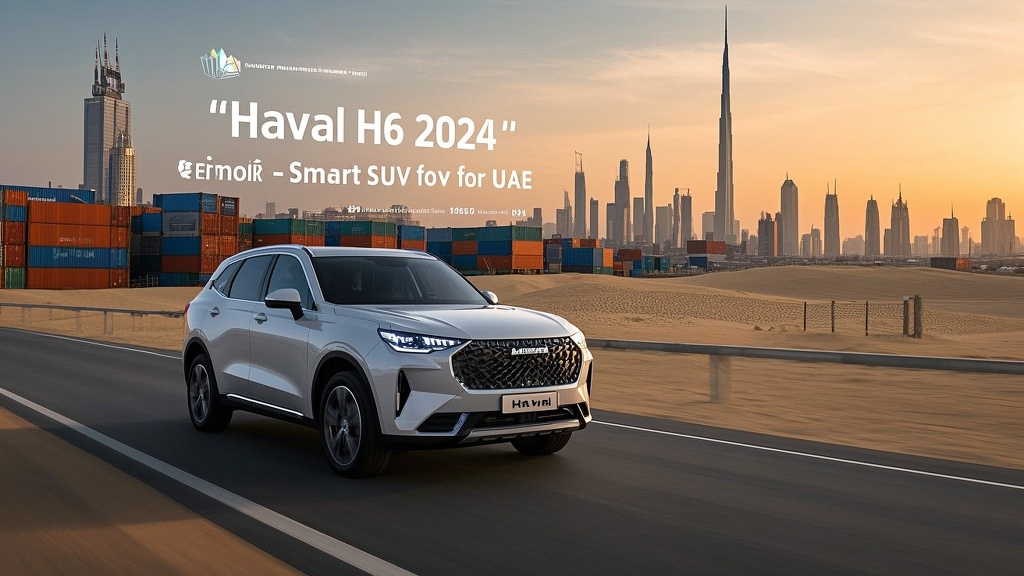
Supply continuity from Guangzhou benefits from mature parts provisioning and multi-supplier pooling for high-wear components. Dealers commonly secure quarterly allocations, with option to front-load color/mix based on seasonality (white and silver trending in GCC). Spare parts replenishment should be synchronized to the VINs sold to ensure pick-rate efficiency and minimize dwell times in service bays.
V. Cooperation Models and Strategic Advice
For UAE dealers and distributors, the cooperation pathway typically follows phased onboarding that balances inventory risk with market testing:
- Pilot Batch: 10–30 units covering two trims to validate price positioning, AC performance feedback, and initial aftersales response.
- Volume Scaling: Quarterly commitments aligned to promotional calendars (Ramadan, back-to-school, year-end). Negotiate freight blocks for predictability.
- Aftersales Readiness: Stock essential parts (filters, brake components, AC consumables), train technicians on ADAS calibration, and ensure bilingual service materials.
- Digital Funnel: Localized English/Arabic pages with transparent spec lists, finance calculator, and booking slots to reduce showroom friction.
We encourage prospective partners to visit the Guangzhou export base to review QC protocols, homologation documentation, and accessory integration options. On-the-ground inspection of PDI workflow and parts warehouse helps align service SLAs to UAE consumer expectations.
VI. Closing Notes: Stability of China Supply and Platform Credibility
China’s automotive export capability has matured beyond price arbitrage into disciplined supply reliability. For the Haval H6 (2024), consistent VIN allocation, parts forecasting, and GCC-relevant calibration reduce operational surprises. In the UAE, the opportunity is not merely filling a price gap; it is expanding the addressable market where buyers who may have delayed purchases during price volatility now find a compelling, well-equipped SUV with transparent total cost of ownership. Platform-level coordination—factory liaison, shipping schedule integrity, documentation accuracy—remains the practical differentiator.
Contact us or visit our Guangzhou export base.
VII. Frequently Asked Questions (3–5)
- Is the Haval H6 (2024) GCC-compliant? Yes, batches are configured for regional standards; we assist with ECAS/ESMA conformity and documentation. Confirm final spec at PO stage.
- What lead times should dealers plan for? From PO to showroom readiness, typical planning is 6–9 weeks, depending on production slot, freight mode (Ro-Ro vs container), and clearance.
- What warranty and aftersales support is available? Standard warranty programs can be aligned to UAE expectations (e.g., 3–5 years) with parts stocking and ADAS calibration capability; details set by local distributor agreement.
- Which payment terms are supported? Commonly T/T with milestone schedule or LC at sight for larger volumes. Terms are finalized per contract and credit profile.
- Are hybrid or special trims available? Availability is subject to production plan and GCC homologation; we share current trim catalog and option packs during negotiation.
For more information, you can contact us. jiasou666@gmail.com
相关文章