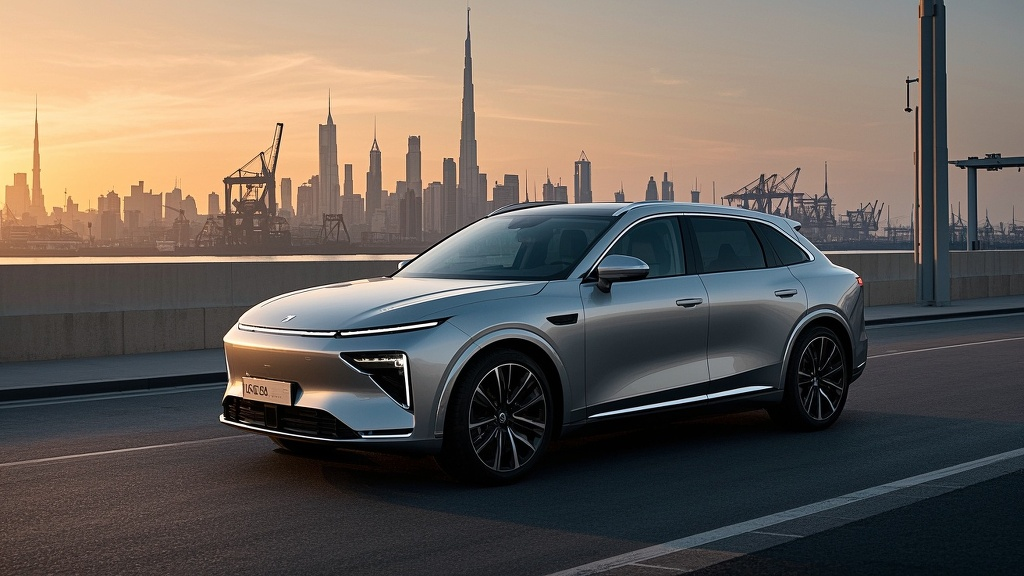
Li Auto Li ONE 2021 Export Insight for United Arab Emirates via Jebel Ali Port, Dubai
Li Auto Li ONE 2021 Export Insight for United Arab Emirates via Jebel Ali Port, Dubai
Chinese name: 理想汽车 理想 ONE 2021 对阿联酋出口分析
The United Arab Emirates automobile market is defined by high urbanization, premium SUV preference, and rising acceptance of electrified drivetrains that lower operating costs without compromising comfort. Within this context, the Li Auto Li ONE 2021—an extended-range electric SUV designed for long-haul utility and family mobility—aligns with the UAE’s dual demand for low total cost of ownership and dependable air-conditioning performance under high ambient temperatures. Wholesale distributors focusing on CIF export into Jebel Ali Port, Dubai will find liquidity pockets among buyers seeking new-energy practicality and spacious interiors, but also wanting predictable service support and parts continuity.
Market Overview
Demand structure in the UAE favors larger, feature-rich SUVs, with safety and comfort ranking high, and resale value shaped by brand reputation and maintenance assurance. New-energy adoption in the UAE is widening, supported by well-developed urban charging in Dubai and Abu Dhabi, corporate sustainability commitments, and government discourse around reduced emissions. Yet mass market growth depends on robust supply and aftermarket readiness. In parallel, Chinese vehicle imports have grown steadily, leveraging price-performance and faster product iteration. These models increasingly arrive via wholesale distributors, using CIF terms to fix ocean freight and insurance costs, and leveraging Jebel Ali’s efficiency for regional re-export into GCC neighbors.
Wholesale importers in Dubai have pivoted to data-led inventory strategies, mixing Ro-Ro and containerized shipments to manage model integrity and month-to-month demand volatility. In this setting, Li Auto’s Li ONE 2021, with its range-extender architecture, addresses range anxiety and charging variability, while keeping running costs materially lower than similarly sized petrol-only SUVs. The strategic angle: pairing practical electrification with large-cabin comfort suited to family and chauffeur fleets, without the risk of pure-EV infrastructure dependencies outside urban cores.
Macroeconomically, steady tourism, logistics, and real estate activity underpin automobile consumption. Price sensitivity is present, but buyers regularly trade up for tangible features: cabin space, ADAS, and credible aftersales. Chinese imports benefit from competitive CIF pricing and extensive supplier networks in Guangzhou, making lead times consistent. The import pathway into Jebel Ali is also familiar to local brokers, simplifying customs clearance and port handling.
Model Highlights Adapted to UAE Conditions
Li ONE 2021 is an extended-range electric SUV (EREV). Daily city use can rely on electric drive if charging is available; highway and inter-emirate use is buffered by the onboard generator. This dual-mode reduces operating risk in mixed charging environments and stabilizes fleet planning. Consider the following UAE-fit attributes:
| Feature | Specification (Indicative) | UAE Relevance |
|---|---|---|
| Fuel/Energy Efficiency | City electric drive; generator-supported long trips; petrol use typically ~7–9 L/100 km when range-extender is active (usage-dependent) | Meaningful reduction in fuel spend vs. comparable petrol SUVs; flexible operations across emirates |
| Space & Comfort | 6-seat layout (2+2+2), large cabin, strong AC performance, family and executive use | High-value comfort in Dubai/Abu Dhabi markets; multi-passenger trips with generous legroom |
| Price-Value Ratio | CIF Jebel Ali at $42,000–$48,000; feature density rivals premium segments | Competitive entry point for distributors with margin headroom in retail |
| Durability & Thermal Management | Robust SUV platform; battery thermal management designed for high ambient temperatures | Reliable AC and thermal stability crucial for UAE heat; operational uptime improves |
Compatibility note: the Li ONE sold in China typically uses GB/T charging standards. For the UAE, CCS2 adaptation or professionally installed conversion solutions are recommended, aligning with local charging infrastructure. Distributors often bundle adapters or retrofit kits to maintain user convenience.
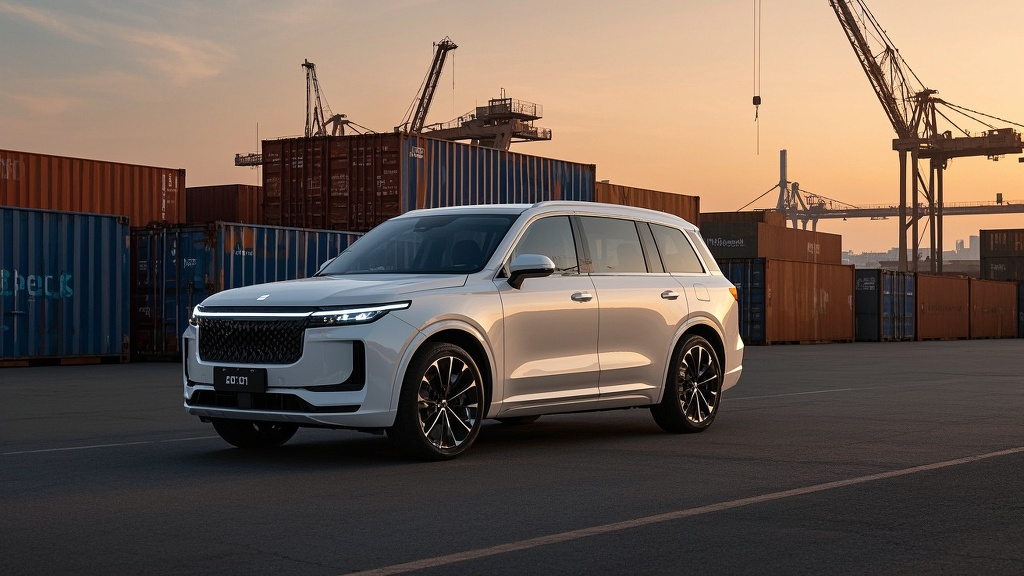
Price Analysis: $42,000–$48,000 CIF
Under CIF export terms to Jebel Ali Port, Dubai, the quoted range $42,000–$48,000 includes vehicle cost, marine insurance, and ocean freight. CIF pricing stabilizes logistics variables for distributors, leaving destination costs (customs, port handling, documentation, registration, local logistics) outside the CIF envelope. Wholesale buyers should stress-test margins using realistic post-CIF estimates to avoid underpricing in retail lanes.
- Export price basis: Typical FOB Guangzhou for Li ONE 2021 depends on trim, mileage/condition, and batch volume. CIF at $42,000–$48,000 implies aggregated freight and insurance from South China terminals to Jebel Ali.
- Destination duty/VAT (indicative): UAE customs duty for passenger vehicles is often ~5% of CIF; VAT commonly 5% applied to CIF plus duty. Check the latest UAE Federal Tax Authority and customs schedules for definitive rates.
- Other destination charges: Port handling, customs broker services, inspection, registration, and roadworthiness. Distributors commonly budget an extra $1,000–$2,000 per unit for these, depending on process speed and service tiers.
- Dealer margin logic: Positioning near mid-range CIF allows workable gross margins after duty/VAT and local prep. A structured retail MSRP strategy should include service package pricing and CCS2 retrofit options.
Risk factors include currency movement, shipping lane surcharges, and insurance adjustments during peak seasons. Batch procurement improves leverage over freight rates and simplifies scheduling. Experienced Guangzhou exporters often consolidate models and negotiate multi-ship contracts to reduce volatility.
Logistics and Supply Chain from Guangzhou to Jebel Ali Port, Dubai
The supply chain is optimized around established South China export workflows and the efficiency of Jebel Ali anchorage. Ro-Ro is the preferred mode for complete vehicles when available; high-value units or limited lane capacity may use containerization (typically 40’ high cube) with secure immobilization.
- Pre-export preparation: Condition verification, VIN documentation, compliance checks, and accessory bundling (e.g., CCS2 adapter kits). Insurance coverage is finalized pre-loading.
- Inland movement: Trucking from Guangzhou storage to the designated port terminal (e.g., Nansha). Export customs declarations processed alongside inspection scheduling.
- Ocean freight: Sailing via mainstream carriers; direct or transshipment routes through key hubs. Typical transit time is approximately 25–35 days, depending on sailing frequency and port congestion.
- Arrival at Jebel Ali: Discharge, customs clearance, duty/VAT settlement, and port handling. Local distribution moves by car carrier to warehouses in Dubai or Sharjah for pre-delivery inspection (PDI).
- Aftermarket readiness: Parts inventory, AC system checks, and charging retrofit services arranged prior to retail release. Distributors often secure a minimal critical parts stock to ensure SLA commitments.
Quality assurance during transit centers on packing standards, theft prevention, and pre-shipment photo documentation. Wholesale buyers should institute a standardized condition checklist to minimize disputes and accelerate acceptance on arrival.
Collaboration Models and Recommendations
For wholesale distributors in the UAE, the collaboration path with Guangzhou suppliers typically falls into three models: bulk CIF purchase, consignment-supported retail pilots, and mixed-model portfolio loads. Each assumes clear SLAs on documentation, transit schedules, and aftersales readiness. Consider:
- Batch-based CIF procurement: Locks pricing and lead times, maximizes negotiating power on freight and insurance. Best for established distributors with steady monthly sales.
- Pilot consignments: Useful for testing buyer response to EREV SUVs in sub-markets around Dubai and Abu Dhabi, with minimal capital lock-in.
- Portfolio bundling: Combine Li ONE units with other popular Chinese SUVs to diversify showroom appeal and reduce inventory risk.
- Technical adaptation: Offer CCS2 charge-port retrofit or certified adapters; communicate AC performance, battery cooling capabilities, and service intervals clearly.
Recommendation: Invite key buyers or distributor teams to Guangzhou for facility tours, compliance Q&A, and price planning sessions. This reduces uncertainty and enables direct inspection of units before shipment. Close-loop collaboration shortens demand-feedback cycles, improving inventory accuracy.
Conclusion
The Li Auto Li ONE 2021 positions well in the UAE’s utility-driven SUV market: spacious interior, dual-mode powertrain, and a realistic cost envelope when imported under CIF to Jebel Ali Port. Chinese supply chains—anchored in Guangzhou—offer scale, reliable consolidation, and schedule discipline. For wholesale distributors, the leverage lies in precise pricing, technical clarity on charging standards, and service credibility. As electrified SUVs normalize across UAE urban centers, extended-range solutions provide a pragmatic bridge to fully electric models without sacrificing route flexibility.
Contact us or visit our Guangzhou export base.
FAQs
- Q: What is included in $42,000–$48,000 CIF to Jebel Ali? A: Vehicle cost, marine insurance, and ocean freight. Customs duty, VAT, port handling, and registration are not included.
- Q: How does the Li ONE perform in UAE heat? A: The vehicle’s thermal management and AC are designed for high ambient temperatures. We recommend preventive checks and filter maintenance to sustain peak performance.
- Q: What charging standard does the Li ONE use? A: China-market Li ONEs use GB/T. For the UAE, CCS2 retrofit or certified adapters are advised to align with local infrastructure.
- Q: Typical transit time from Guangzhou to Jebel Ali? A: Approximately 25–35 days, subject to sailing schedules and port traffic.
- Q: Are parts and service available locally? A: Distributors typically hold core parts stock and partner with specialized workshops. Service SOPs and training can be arranged during collaboration.
For more information, you can contact us. jiasou666@gmail.com
相关文章