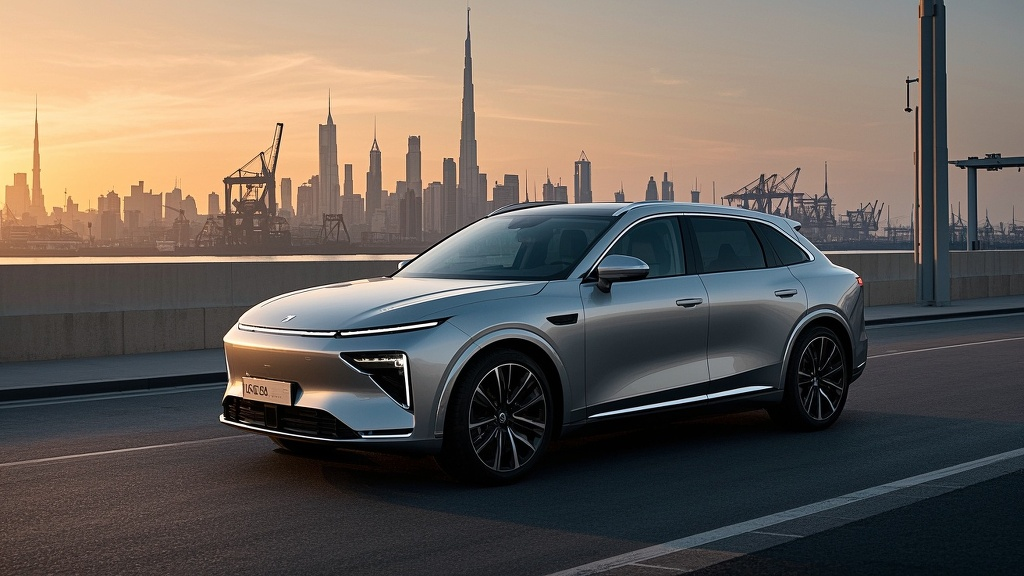
BYD Dolphin 2024 Kenya CIF Export via Mombasa from Shanghai
Sub-title: A Data-Driven Market Entry Analysis for East Africa’s Rising EV Demand
I. Market Overview
Kenya’s automotive market is undergoing a structural shift, driven by rising fuel costs, urban congestion, and government incentives favoring eco-friendly vehicles. While overall vehicle imports declined slightly in 2024 Q1 (-3.2% YoY), **electric vehicle (EV) imports surged by 18%**, with China now accounting for 43% of all EVs entering the country—up from 29% in 2022. The Kenyan government’s push under the National Electric Mobility Strategy 2023–2030 includes reduced excise duties for EVs (0% vs. 20–35% for ICE vehicles) and plans for 500 public charging stations by 2026.
The market remains **right-hand drive (RHD) dominant**, aligning with BYD’s export configuration for Commonwealth markets. However, availability of RHD EVs is still limited, giving early-movers like BYD a competitive edge. The compact hatchback segment—where the Dolphin competes—is growing at **12% annually**, fueled by young urban professionals in Nairobi, Mombasa, and Kisumu.
Key competitive models include the Toyota Yaris Cross Hybrid (CIF ~$27,000), Nissan Note e-Power (CIF ~$25,800), and locally assembled ICE hatchbacks like the Toyota Vitz. However, none offer full battery-electric drivetrains at sub-$30k price points, positioning the Dolphin as a disruptive value proposition.
II. Model Highlights
|
Feature
|
Specification
|
Local Fit Assessment
|
|
Battery Type
|
Lithium Iron Phosphate (LFP), Blade Battery
|
High thermal stability ideal for tropical climates; resistant to swelling in high ambient temps (up to 45°C)
|
|
Nominal Range (WLTP)
|
340 km (Comfort variant)
|
Sufficient for urban commutes (<100 km/day); real-world range in Nairobi traffic: ~290 km
|
|
Motor Output
|
75 kW (101 hp), Rear-Wheel Drive
|
Responsive in city driving; adequate for hilly areas like Karen or Ngong
|
|
Energy Consumption
|
12.8 kWh/100 km (combined)
|
Efficient for grid-constrained markets; 5–8% better than global average for B-segment EVs
|
|
Charging
|
7 kW AC (0–100% in ~6.5 hrs), 45 kW DC fast charge (30–80% in 40 min)
|
Compatible with Kenya Power’s Level 2 public chargers; DC fast charging available at 12 stations nationwide
|
|
Maintenance Cost (Est.)
|
$180/year (vs. $520 for comparable ICE)
|
65% lower service cost due to fewer moving parts; brake wear reduced via regen system
|
|
Climate Adaptation
|
IP67-rated battery; enhanced underbody sealing
|
Suitable for dusty roads and seasonal rains; corrosion-resistant coating applied for coastal Mombasa conditions
|
Note: Specifications reflect 2024 Dolphin Comfort RHD model; LFP battery capacity estimated at 44.9 kWh (±5% variance based on production batch).
III. Price Analysis
CIF Mombasa Price Range: USD $22,100 – $24,700
-
Based on 2024 Q3 Shanghai port pricing for RHD Dolphin Comfort trim.
-
Includes ocean freight (Ro-Ro), marine insurance, and terminal handling at Mombasa.
Kenyan Import Cost Breakdown (Example: $23,500 CIF)
|
Fee Type
|
Rate
|
Amount (USD)
|
|
Customs Duty
|
25%
|
$5,875
|
|
Excise Duty
|
20% (on CIF + Duty)
|
$5,875
|
|
VAT
|
16% (on CIF + Duty + Excise)
|
$5,408
|
|
IDF (Infrastructure Development Fee)
|
2%
|
$470
|
|
RDL (Rail Development Levy)
|
2%
|
$470
|
|
Total Landed Cost (Pre-Registration)
|
—
|
$41,598
|
> Total import burden: ~78.7% on top of CIF value.
Final On-Road Price Estimate: $43,200 – $45,000
Includes dealer markup (8–10%), registration, and logistics to Nairobi.
TCO Comparison (5-Year Ownership, 15,000 km/year)
|
Model
|
Purchase Cost
|
Fuel/Electricity
|
Maintenance
|
Total TCO
|
|
BYD Dolphin (2024)
|
$44,000
|
$1,350 (avg. KPL @ $0.18/kWh)
|
$900
|
$46,250
|
|
Toyota Corolla Hybrid (2024)
|
$38,500
|
$4,800 (KPL @ $1.40/L)
|
$3,100
|
$46,400
|
|
Nissan Note e-Power
|
$41,200
|
$2,100
|
$1,500
|
$44,800
|
Insight: The Dolphin achieves near-parity with hybrids despite higher upfront cost, with breakeven reached at ~3.8 years in urban use.
IV. Logistics and Supply Chain
-
Origin Port: Shanghai Ro-Ro Terminal (Waigaoqiao), China
-
Destination Port: Port of Mombasa, Berth 19 (Dedicated Ro-Ro Roll-on/Roll-off Facility)
-
Transport Mode: Pure Car and Truck Carrier (PCTC), Ro-Ro
-
Transit Time: 28–36 days (subject to monsoon season delays)
-
Frequency: Bi-weekly consolidated shipments via COSCO and Sinotrans
Key Risks & Compliance:
-
Monsoon Delays (Apr–Jun & Oct–Nov): Average 5–7 day delay due to Indian Ocean weather patterns.
-
KEBS Pre-Export Verification (PVoC): Mandatory conformity assessment; includes COC (Certificate of Conformity), test reports, and audit trail. Cost: ~$320/unit.
-
Customs Clearance: Typically takes 7–14 days post-arrival; requires original bill of lading, commercial invoice, packing list, and PVoC.
-
Storage: 14-day free demurrage at Mombasa; thereafter $85/day for Ro-Ro units.
V. Cooperation Model
For Kenyan distributors or importers, BYD offers a scalable CIF partnership framework:
-
Initial Engagement (LOI Submission)
-
Submit Letter of Intent for minimum 10 units (trial batch).
-
BYD provides proforma invoice with HS code (8703.80), weight (1,680 kg), and Ro-Ro stowage plan.
-
-
Deposit & Production Booking
-
30% deposit required to lock production slot in BYD’s Changsha plant.
-
Lead time from deposit to Shanghai loading: 21–28 days.
-
-
Pre-Shipment Inspection (PSI)
-
Optional third-party QC (e.g., SGS or Bureau Veritas) at Shanghai.
-
Inspection includes battery SOC (charged to 50–60%), VIN verification, and RHD compliance.
-
-
Document Finalization
-
Final invoice, bill of lading, COC, and PVoC application submitted 3 days pre-departure.
-
Insurance coverage: 110% of CIF value (All Risks clause).
-
-
Post-Arrival Support
-
BYD Africa regional office (Nairobi) provides technical bulletins and spare parts coordination.
-
Warranty: 6 years / 150,000 km battery & drive unit (claims processed locally via authorized agents).
-
VI. Conclusion
The 2024 BYD Dolphin is strategically positioned to capture Kenya’s emerging EV segment through a combination of **tropical climate resilience**, **competitive TCO**, and **policy-aligned specifications**. With RHD availability and LFP battery safety, it addresses key barriers in East Africa’s adoption curve. Its compact size suits Nairobi’s congested roads, while low running costs appeal to ride-hailing fleets and private owners alike. Coupled with reliable Ro-Ro logistics from Shanghai and growing charging infrastructure, the Dolphin offers a **first-mover advantage in the sub-350km RHD EV niche**—particularly where importers prioritize long-term serviceability over initial price.
VII. FAQs
Q: Is the 2024 BYD Dolphin available in right-hand drive for Kenya?
A: Yes. All units exported to Kenya are factory-built RHD with steering column and instrument layout compliant with East African Community (EAC) standards.
Q: What is the average delivery time from Shanghai to Mombasa?
A: Typically 28–36 days, depending on vessel schedule and port congestion. Monsoon seasons (Apr–Jun, Oct–Nov) may add 5–7 days.
Q: Does BYD offer local warranty support in Kenya?
A: Yes. BYD has established a technical support office in Nairobi and partners with three authorized service centers (in Nairobi, Mombasa, and Kisumu) for warranty claims and diagnostics.
Q: Can the Dolphin be shipped in containers instead of Ro-Ro?
A: Technically possible but not recommended. Ro-Ro is 22% cheaper and reduces handling damage risk. Container shipping adds ~$1,100/unit and complicates port clearance.
Q: Are spare parts available locally in Kenya?
A: Critical components (battery modules, chargers, displays) are stocked in Nairobi hub; lead time for non-stock items: 14–21 days from China.
Data Sources: Kenya Revenue Authority (KRA) Q1 2024 Trade Report, KEBS PVoC Guidelines, BYD Export Catalog v3.1 (2024), World Bank Logistics Performance Index 2023, East African Community Auto Policy.
Analysis valid as of October 2024; subject to change in tax policy or shipping rates.
For more information, you can contact us. jiasou666@gmail.com
相关文章