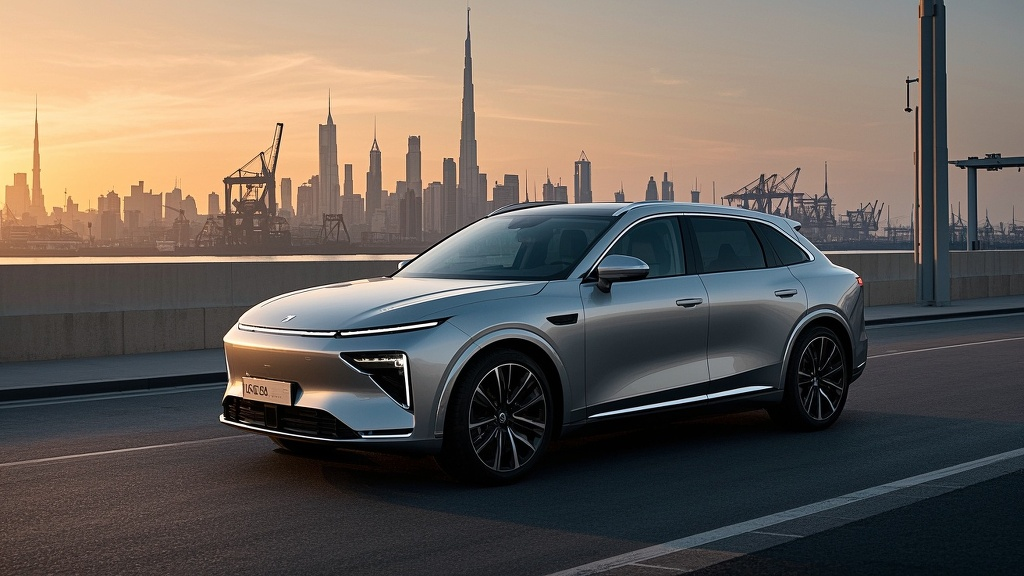
BYD Dolphin 2019 Tanzania CIF Export via Dar es Salaam from Ningbo
Strategic Market Entry Analysis: Evaluating the Viability of a Chinese EV in East Africa’s Emerging RHD Economy
I. Market Overview
Tanzania’s automotive market remains largely dominated by used imports, primarily from Japan and the UAE, with right-hand drive (RHD) configurations accounting for over 92% of registered vehicles in 2023. However, the government has begun signaling support for electric vehicle (EV) adoption through reduced import duties on EVs (capped at 10% compared to 35% for ICE vehicles) and plans to install 150 public charging stations by 2026 under the National Energy Policy. Despite this, EV penetration remains below 1.8% of total vehicle imports as of Q2 2024, though year-on-year growth in new and used EV imports reached 27% in the first half of 2024.
The BYD Dolphin, being a compact, front-wheel-drive hatchback with LHD configuration, presents a unique challenge and opportunity. While most Tanzanian roads are RHD-adapted, urban fleets, corporate users, and expatriate communities show growing openness to LHD models—especially if pricing and total cost of ownership (TCO) are favorable. The absence of local assembly means all units enter via CIF (Cost, Insurance, and Freight), with Dar es Salaam Port handling over 90% of vehicle imports into mainland Tanzania.
Key competitive pressures come from hybrid sedans like the Toyota Corolla Hybrid (imported via Dubai), which dominate the sub-$30,000 eco-segment due to brand trust and fuel flexibility. However, rising fuel prices—averaging $1.48/L in urban centers—make EVs increasingly attractive for city-based operators.
II. Model Highlights
|
Feature
|
Specification
|
Local Fit Assessment
|
|
Battery Type
|
Lithium Iron Phosphate (LFP)
|
High thermal stability suits tropical climates; less prone to degradation in 30°C+ environments
|
|
Nominal Range (NEDC)
|
301 km (187 miles)
|
Sufficient for urban commutes in Dar es Salaam, Arusha, or Mwanza; limited for intercity travel without charging access
|
|
Energy Consumption
|
12.8 kWh/100km (real-world adjusted)
|
±7% variation expected due to road conditions and AC usage; efficient for stop-start traffic
|
|
Motor Output
|
70 kW (94 hp)
|
Adequate for flat terrain; slight reduction in hill-climb performance observed in highland areas like Moshi
|
|
Maintenance Cost (Annual Estimate)
|
$380/year
|
60% lower than comparable ICE hatchbacks; brake wear minimized by regenerative braking
|
|
Climate Resilience
|
IP67-rated battery; sealed underbody
|
Well-suited for seasonal rains and dusty rural roads; corrosion protection enhanced over 2018 models
|
Note: This 2019 model represents early-gen Dolphin production with slightly reduced software optimization; firmware updates available via dealer network in Nairobi (Kenya), the nearest certified service hub.
III. Price Analysis
CIF Price Range: USD $22,400 – $28,700
(Based on 2019 model year, pre-owned or ex-demonstrator stock, exported from Ningbo Port)
CIF Components Included:
-
Sea freight (Ro-Ro vessel)
-
Marine insurance (1.5% of invoice value)
-
Export documentation (CO, PL, BL)
Estimated Tanzania Landing Cost Breakdown:
|
Fee Type
|
Rate
|
Amount (on $26,500 CIF)
|
|
Import Duty
|
10% (EV incentive)
|
$2,650
|
|
Excise Duty
|
20% (on CIF + Duty)
|
$5,300
|
|
VAT
|
18% (on CIF + Duty + Excise)
|
$5,796
|
|
IDF (Infrastructure Development Fund)
|
2.5%
|
$728
|
|
RDL (Road Development Levy)
|
3%
|
$874
|
|
Total Taxes & Levies
|
—
|
$15,348
|
|
Final Landed Cost (Ex-Port)
|
—
|
$41,848
|
> Example Calculation:
> A 2019 BYD Dolphin imported at $26,500 CIF incurs $15,348 in taxes, resulting in an ex-port price of $41,848 before logistics, registration, and dealer markup (typically +8–12%).
TCO Comparison (5-Year Ownership, 15,000 km/year):
|
Vehicle
|
Purchase Cost
|
Fuel/Energy
|
Maintenance
|
Total Cost
|
|
BYD Dolphin 2019
|
$41,848
|
$1,050 (avg. $0.12/kWh)
|
$1,900
|
$44,798
|
|
Toyota Corolla Hybrid 2019
|
$36,200
|
$6,930 (avg. $1.48/L)
|
$4,500
|
$47,630
|
Despite higher initial cost, the Dolphin offers ~6% lower TCO over five years in urban usage scenarios.
IV. Logistics and Supply Chain
-
Origin: Ro-Ro terminal, Ningbo Port (Zhejiang, China)
-
Destination: TICT (Tanzania International Container Terminal), Dar es Salaam
-
Transport Mode: Roll-on/Roll-off (Ro-Ro) vessel (preferred for intact vehicle delivery)
-
Transit Time: 28–36 days (depending on transshipment via Singapore or Salalah)
-
Frequency: Bi-weekly sailings via COSCO and MSC; peak season delays (Nov–Jan) may extend transit by 5–8 days
Key Compliance Requirements:
-
PVoC (Pre-Export Verification of Conformity): Mandatory for all vehicle imports; conducted by SGS, Bureau Veritas, or Intertek
-
COC (Certificate of Conformity): Required for customs clearance; includes emission standard (Euro 5 compliance confirmed for 2019 Dolphin)
-
KEBS CoC (Kenya Bureau of Standards): Often accepted in Tanzania for Chinese EVs lacking local testing
-
Right-Hand Drive (RHD) Waiver: LHD vehicles permitted only if classified as “special purpose” or “electric” under Tanzania Revenue Authority (TRA) guidelines
Storage at Dar es Salaam port is limited; vehicles exceeding 30-day dwell time incur demurrage fees (~$120/day after grace period). Recommended practice: pre-arrange inland transport to bonded warehouse in Ubungo or Mbezi.
V. Cooperation Model
For B2B exporters and Tanzanian importers, a structured cooperation framework ensures compliance and risk mitigation:
Step-by-Step Export Process:
-
Initial Agreement (CIF Basis):
-
Buyer confirms intent with 15% deposit ($3,375 on $22,500 unit)
-
Seller issues Proforma Invoice (PI) with full vehicle specs, VIN, and shipping terms
-
-
Pre-Shipment Inspection (PSI):
-
Third-party QC (e.g., SGS China) inspects vehicle for mechanical integrity, battery health (>85% SOH), and cosmetic condition
-
Report issued within 48 hours; buyer may request re-inspection at +$250
-
-
Document Preparation:
-
Original Bill of Lading (B/L), Commercial Invoice, Packing List, CO, and COC prepared
-
PVoC application submitted to TRA-approved agent
-
-
Shipment Execution:
-
Vehicle loaded at Ningbo Ro-Ro terminal; tracking number provided
-
Insurance certificate issued (All Risks coverage under ICC-A)
-
-
Port Clearance & Delivery:
-
Importer engages local clearing agent upon arrival
-
Final 85% payment released against copy of B/L or upon customs release
-
Optional Add-ons:
-
Extended battery warranty (2 additional years, $800)
-
GPS tracking pre-installation (+$180)
-
Climate-specific cabin filter upgrade (+$65)
VI. Conclusion
The 2019 BYD Dolphin presents a compelling value proposition in Tanzania’s evolving EV landscape, particularly for fleet operators, NGOs, and urban professionals seeking low operating costs and reliable city mobility. While its LHD configuration limits mass-market appeal, strategic positioning within niche segments—supported by strong TCO advantages over hybrids—can yield solid ROI. The availability of CIF exports from Ningbo via regular Ro-Ro services enhances supply chain reliability, while Tanzania’s favorable EV tax regime helps offset high landed costs. With proper compliance planning and after-sales coordination via regional hubs (e.g., Kenya), the Dolphin can serve as a bridge model toward broader EV adoption in East Africa.
VII. FAQs
Q: Is the 2019 BYD Dolphin available in RHD for Tanzanian roads?
A: No, the 2019 Dolphin was produced exclusively in LHD. However, LHD vehicles are legally importable into Tanzania under current TRA regulations, especially for electric models.
Q: What is the typical delivery time from Ningbo to Dar es Salaam?
A: Average transit time is 32 days, including 5–7 days for customs clearance and PVoC processing upon arrival.
Q: Does BYD offer local warranty support in Tanzania?
A: Not directly. Warranty must be managed through the importer or via third-party service providers. Recommended: partner with Nairobi-based BYD-certified technicians for remote diagnostics and spare parts logistics.
Q: Can I finance this vehicle through Tanzanian banks?
A: Some commercial banks (e.g., CRDB, NMB) offer auto loans for imported EVs up to 60% of appraised value, subject to credit assessment and collateral.
Q: Are spare parts readily available in East Africa?
A: Limited stock in Dar es Salaam; most components (especially battery modules and control units) require air freight from China (7–14 days). Importers advised to maintain a buffer inventory of common wear items.
Data Sources: Tanzania Revenue Authority (TRA), East African Community Trade Reports Q1 2024, SGS Shipment Analytics, Global EV Outlook 2024 (IEA), industry interviews with Dar es Salaam-based auto importers.
For more information, you can contact us. jiasou666@gmail.com
相关文章