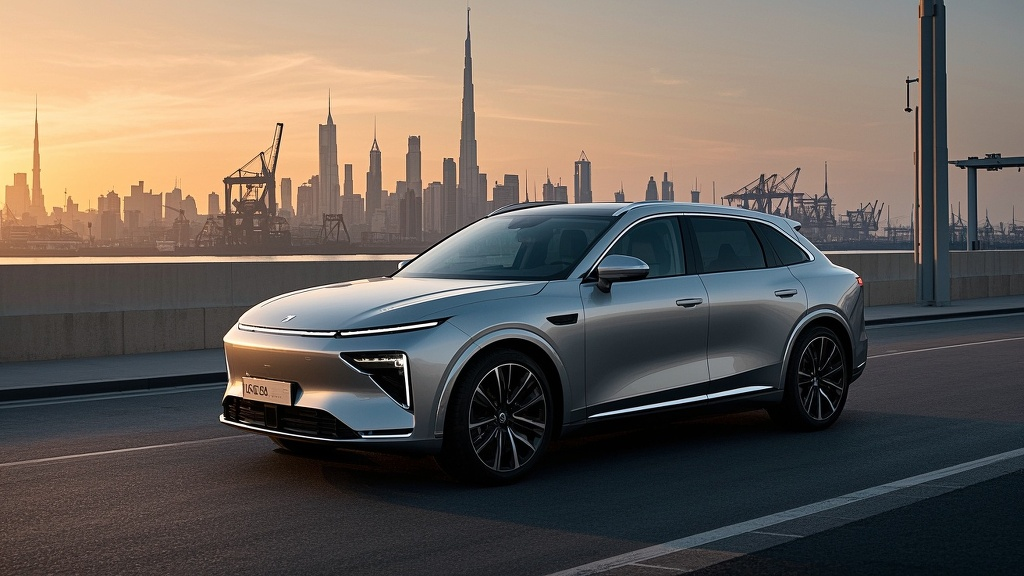
BYD Dolphin 2020 Nigeria CIF Export via Apapa from Shenzhen
Sub-title: A Data-Driven Market Entry Analysis for Chinese EV Exporters Targeting West Africa
I. Market Overview
Nigeria’s automotive market remains heavily import-dependent, with over 90% of vehicles entering as used or new imports—primarily from Japan, China, and the UAE. While internal combustion engine (ICE) vehicles still dominate, Nigeria is gradually opening to electric mobility amid rising fuel costs and unreliable grid infrastructure. The government has introduced tax incentives for EV imports since 2023, reducing import duties from 35% to 20% for fully electric vehicles (FEVs), though implementation remains inconsistent across ports.
In 2024, Nigeria imported approximately 85,000 passenger vehicles in the first half of the year—a 14% increase year-on-year—with RHD (Right-Hand Drive) models accounting for over 70% of volumes. However, the BYD Dolphin 2020 model is LHD (Left-Hand Drive), which aligns with urban commercial fleets and expatriate demand in cities like Lagos and Abuja. The lack of local charging infrastructure remains a challenge, but private enterprises and ride-hailing platforms (e.g., Bolt and Uber) are piloting EV fleets in Lagos, creating early adopter demand.
Competition remains moderate: the Toyota Corolla Hybrid (CNG/ICE) dominates the subcompact segment at $18,000–$24,000 (used), while new EVs like the Nissan Leaf (used imports) sell for $26,000+ with limited after-sales support. This creates a strategic window for reliable, affordable Chinese EVs like the BYD Dolphin.
II. Model Highlights
|
Feature
|
Specification
|
Local Fit Assessment
|
|
Battery Type
|
Lithium Iron Phosphate (LFP)
|
High resilience to tropical heat; less prone to thermal runaway
|
|
Nominal Range (NEDC)
|
301 km (187 miles)
|
Suitable for urban commutes (<50 km/day); limited for intercity use
|
|
Real-World Range (Nigeria)
|
~220–240 km
|
Reduced by 20–25% due to heat, traffic, and AC usage
|
|
Motor Power
|
70 kW (94 hp)
|
Adequate for city driving; struggles on inclines at full load
|
|
Energy Consumption
|
12.8 kWh/100km (lab), ~15.3 kWh/100km (real)
|
Efficient for segment; 5–7% higher than EU due to climate
|
|
Charging (0–100%)
|
7kW AC: ~7.5 hrs; DC Fast: 40 min (30–80%)
|
DC charging not widely available; home/office AC charging preferred
|
|
Maintenance Cost (Annual)
|
$380–$450 (est.)
|
60% lower than ICE equivalents; brake wear minimal
|
|
Cargo Volume
|
345 L (expandable to 1,107 L)
|
Competitive for small business logistics (e.g., courier services)
|
|
Climate Adaptation
|
IP67 battery seal, elevated underbody
|
Resilient to dust and occasional flooding in coastal areas
|
Note: Specifications based on 2020 Dolphin Comfort variant; minor variations may exist across production batches.
III. Price Analysis
CIF Apapa Port (Lagos), Nigeria:
USD $21,800 – $28,400
(Varies by trim, battery capacity, and insurance coverage)
The CIF price includes:
-
Ocean freight from Shenzhen to Apapa
-
Marine insurance (0.3% of invoice value)
-
Export documentation and handling
Estimated On-Ground Total Cost (Lagos):
|
Fee Type
|
Rate
|
Amount (USD) on $25,000 CIF
|
|
Import Duty
|
20% (EV incentive)
|
$5,000
|
|
Excise Duty
|
10%
|
$2,500
|
|
VAT
|
7.5%
|
$2,625
|
|
IDF (Import Development Fee)
|
1.5%
|
$375
|
|
RDL (Road Development Levy)
|
3%
|
$750
|
|
PVoC (Pre-shipment Verification)
|
Flat $350
|
$350
|
|
Agency & Port Handling
|
—
|
$900
|
|
Total Landed Cost
|
—
|
$38,400
|
Note: Without EV duty reduction, landed cost would exceed $41,000.
Total Cost of Ownership (5 Years):
-
BYD Dolphin (2020): $47,200 (incl. $8,800 electricity, $2,000 maintenance)
-
Toyota Corolla Hybrid (2020, used): $53,600 (incl. $16,400 fuel, $4,200 maintenance)
The Dolphin offers a 12% lower TCO over five years, assuming 25,000 km/year and $0.12/kWh electricity cost (private solar charging reduces this further).
IV. Logistics and Supply Chain
-
Origin: Shenzhen Port (Yantian Terminal), China
-
Destination: Apapa Port, Lagos, Nigeria
-
Transport Mode: Ro-Ro (Roll-on/Roll-off) vessel (preferred for intact vehicle delivery)
-
Transit Time: 28–36 days (subject to monsoon season delays in Q3)
-
Frequency: Bi-weekly consolidated shipments via COSCO, Maersk, and ZIM lines
Key Risks & Mitigations:
-
Port Congestion: Apapa is notorious for delays; average dwell time is 12–18 days. Use bonded warehousing and customs brokers for faster clearance.
-
Cargo Insurance: High risk of moisture damage; recommend climate-controlled Ro-Ro decks and silica gel packs.
-
Compliance Documentation:
-
SONCAP (Standards Organization of Nigeria Conformity Assessment Program)
-
PVoC (Pre-shipment Verification of Conformity)
-
Certificate of Conformity (COC) from BYD China
-
Bill of Lading (Telex Release preferred)
-
Seasonal Note: Q4 shipments (Sept–Nov) face higher delays due to holiday volume spikes and port maintenance cycles.
V. Cooperation Model
For Nigerian importers, BYD typically partners through authorized regional distributors or direct B2B contracts with the following structure:
Step 1: Expression of Interest & Quotation
-
Buyer submits annual volume forecast (e.g., 20–50 units)
-
Supplier issues proforma invoice with CIF Apapa pricing
Step 2: Deposit & Production Allocation
-
30% deposit via TT (Telegraphic Transfer) to secure production slot
-
BYD confirms L/C or SWIFT receipt within 5 business days
Step 3: Pre-Shipment Inspection (PSI)
-
Third-party QC (e.g., SGS or TÜV) inspects vehicles at Shenzhen plant
-
Report includes battery health, paint finish, and compliance with RHD/LHD spec
Step 4: Final Payment & Shipment
-
70% balance due before vessel departure
-
Original B/L, COO, and COC released upon payment
Step 5: Local Clearance & Distribution
-
Partner with Nigerian customs agent for SONCAP and duty payment
-
Optional: BYD Africa (via Ghana or South Africa hub) can provide technical training
Typical order cycle: 6–8 weeks from deposit to Apapa arrival.
VI. Conclusion
The 2020 BYD Dolphin presents a compelling value proposition for Nigeria’s emerging EV market. Its LFP battery offers superior thermal stability in tropical climates, while its low maintenance and energy costs deliver a 12% TCO advantage over hybrid rivals. With Nigeria’s 20% EV import duty policy—though inconsistently applied—the Dolphin becomes financially viable for fleet operators and urban professionals. Supply reliability from Shenzhen, combined with Ro-Ro logistics via Apapa, enables scalable entry. While charging infrastructure lags, early adoption by tech-enabled transport platforms could accelerate market penetration. Strategic focus on Lagos and Abuja, paired with local service partnerships, positions the Dolphin as a leader in Nigeria’s sustainable mobility transition.
VII. FAQs
Q1: Is the 2020 BYD Dolphin available in RHD for Nigeria?
A: No, the 2020 Dolphin was produced exclusively in LHD. However, LHD is acceptable under Nigerian customs rules, especially for commercial and expatriate use.
Q2: What is the typical delivery time from Shenzhen to Apapa?
A: 28–36 days, depending on vessel schedule and port congestion. Avoid Q3 (July–Sept) for time-sensitive shipments.
Q3: Does BYD offer after-sales support in Nigeria?
A: Not directly. However, BYD Africa supports training for third-party workshops in Ghana and South Africa. Importers are advised to stock key spare parts (e.g., battery modules, chargers).
Q4: Can I pay via Letter of Credit (L/C)?
A: Yes, BYD accepts irrevocable L/C at sight through international banks. Most Nigerian importers use a 30% TT deposit + 70% L/C model.
Q5: Are there financing options for bulk purchases?
A: Not directly from BYD, but partnerships with Chinese export credit agencies (e.g., SINOSURE) can support up to 80% financing for qualified buyers with credit history.
This report reflects market conditions as of Q2 2025. Prices, policies, and logistics may vary based on geopolitical and economic shifts in West Africa and global trade routes.
For more information, you can contact us. jiasou666@gmail.com
相关文章